JOIN GEOSHARE
3 Critical Considerations When Specifying In-Place Inclinometers (IPIs)
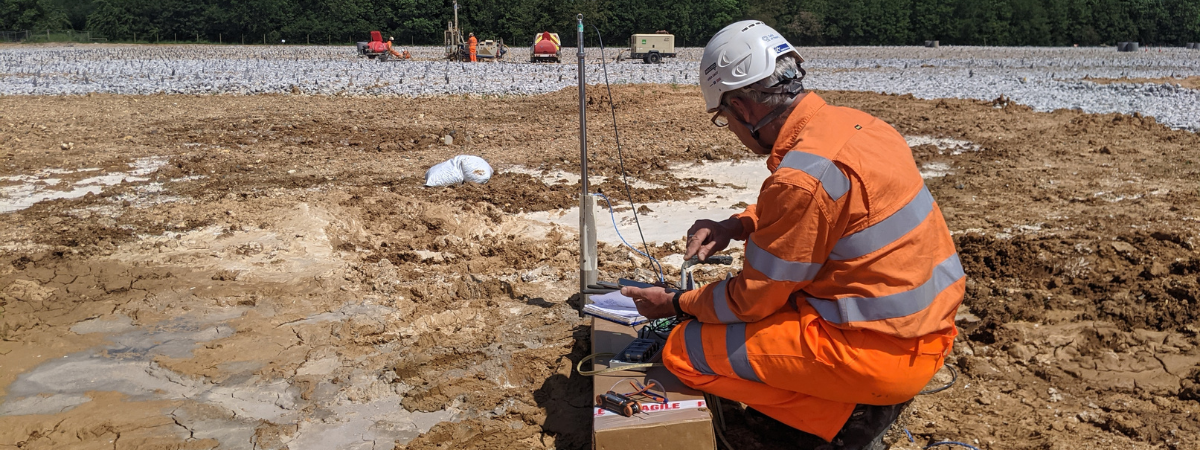
Ground movement rarely announces itself before it happens. Whether you’re monitoring a deep excavation, a retaining wall, a landslide, or an embankment, understanding how the ground is behaving beneath the surface is essential for managing risk and making informed engineering decisions.
In-place inclinometers (IPIs) have become a preferred monitoring solution for many geotechnical projects because they provide continuous, automated measurements of subsurface lateral movement. Unlike manual inclinometer surveys, IPIs deliver real-time or near real-time data, allowing engineers to detect changes quickly and respond before small movements develop into larger problems. t
However, specifying the right IPI system requires more than simply selecting sensors and installing them in a borehole. To ensure meaningful and reliable data, engineers should consider three critical factors during the design stage.
1. Should You Monitor the Full Borehole or Focus on Critical Zones?
One of the first decisions when specifying an IPI system is determining how much of the borehole needs to be instrumented.
Full-Borehole Monitoring
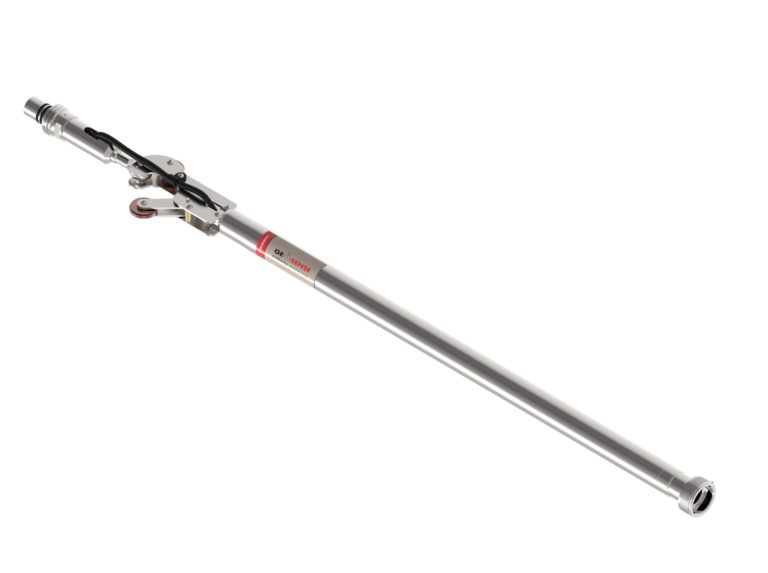
A full-depth installation places sensors throughout the entire inclinometer casing, creating a complete deformation profile from the surface to the base of the borehole. This approach offers several advantages:
- Provides visibility of all potential movement zones.
- Helps identify unexpected deformation at depth.
- Supports long-term monitoring where failure mechanisms may evolve over time.
- Delivers a comprehensive understanding of ground behaviour.
Full-borehole monitoring is often preferred for large infrastructure projects, dams, embankments, and high-risk slopes where the consequences of missing a developing movement zone could be significant.
Targeted Monitoring
In some cases, previous investigations may have already identified the depths most likely to experience movement. Rather than instrumenting the entire borehole, sensors can be concentrated around these critical areas. Benefits include:
- Reduced equipment and installation costs.
- Increased measurement density in key zones.
- Simpler data management and interpretation.
Targeted monitoring can be highly effective when failure surfaces are well understood. However, it carries the risk of overlooking movement occurring outside the monitored interval. Key consideration: How confident are you in the location of potential movement? If uncertainty exists, a full-depth solution may provide greater confidence and reduce monitoring risk.
2. How Will the Sensors Be Oriented?
Sensor orientation is one of the most important aspects of an IPI installation. In-place inclinometers measure tilt relative to a defined axis. If the sensor chain is not aligned correctly with the expected direction of movement, the resulting data may not accurately represent actual ground behaviour.
Understanding Measurement Axes
Most inclinometer casings incorporate guide grooves that establish the measurement direction. During installation, the casing and sensor chain must be oriented consistently to ensure reliable readings throughout the monitoring period. Poor alignment can lead to:
- Reduced sensitivity to actual movement.
- Increased uncertainty in data interpretation.
- Apparent movement being split between measurement axes.
Single-Axis vs. Biaxial Monitoring
When movement is expected primarily in one direction, a single-axis system may be sufficient. Examples include:
- Retaining walls.
- Deep excavations.
- Basement construction projects.
However, many geotechnical environments experience more complex movement patterns. In these situations, biaxial monitoring can provide a more complete picture by measuring deformation in two perpendicular directions. This approach is particularly valuable when:
- The direction of movement is uncertain.
- Ground conditions are complex.
- Movement directions may change during construction or operation.
Key consideration: Is the expected movement direction clearly understood, or could deformation occur in multiple directions?
3. What Is the Expected Movement Plane?
Understanding the anticipated deformation mechanism is critical when selecting the most appropriate monitoring strategy.
Planar Movement
Many projects experience movement that occurs predominantly along a single plane. Examples include:
- Retaining wall deflection.
- Excavation-induced ground movement.
- Simple slope instability.
These scenarios are generally straightforward to monitor and often align well with single-axis measurement systems.
Complex Three-Dimensional Movement
Not all ground movement follows a predictable path. Large slopes, landslides, tunnels, and earthworks may exhibit complex deformation patterns involving movement in multiple directions and at varying depths. In these situations, biaxial systems often provide greater value by capturing the full nature of the movement. Engineers should also consider complementary instrumentation such as:
- Piezometers for groundwater monitoring.
- Extensometers for settlement measurement.
- Survey prisms and automated total stations for surface movement tracking.
The Importance of Geology
The expected movement plane is often influenced by site-specific geological conditions, including:
- Weak clay layers.
- Bedding planes.
- Rock joints and fractures.
- Groundwater pressures.
- Construction sequencing effects.
A thorough understanding of the site’s geology is often the foundation of a successful monitoring programme. Key consideration: Will movement occur along a simple, predictable path, or is there potential for multidirectional deformation?
Getting the Most Value from Your IPI System
Specifying an in-place inclinometer system is about more than selecting sensors, it is about designing a monitoring strategy that answers the key geotechnical questions for your project. Before finalising a specification, ask:
- Do we need complete borehole coverage or targeted monitoring?
- Are the sensors aligned with the anticipated movement direction?
- Is movement likely to occur in one plane or multiple directions?
- Have geological and hydrogeological conditions been fully considered?
By addressing these questions early, engineers can ensure that their IPI installation delivers reliable, actionable data throughout the life of the project.
Page Contents

Share this article