 JOIN GEOSHARE
Engage with specialists early – part 2 of 6 Ways to Improve your I&M

Working with stakeholders
So in the first blog in this series (check it out here), we understood 3 core foundations:
- What are the geotechnical questions we need to answer?
- What are the parameters we need to understand to answer them?
- To what specification do we need to monitor these parameters?
Now we know what we are trying to understand, it is time to engage with the project team, all specialists, to identify how best to measure the parameters you need, to answer the questions you have. Geotechnical and structural instrumentation and monitoring is niche, trust me we know! It therefore means that large parts of your project team are unlikely to work on it every day. It is therefore important to engage with specialists who are working in this field every day. They have a wealth of experience of what works well, and what doesn’t and a multitude of ways to monitor the parameters you require. However, it is important to note that just because they have specialist knowledge, they do not assume all the responsibility when it comes to answering those geotechnical questions.

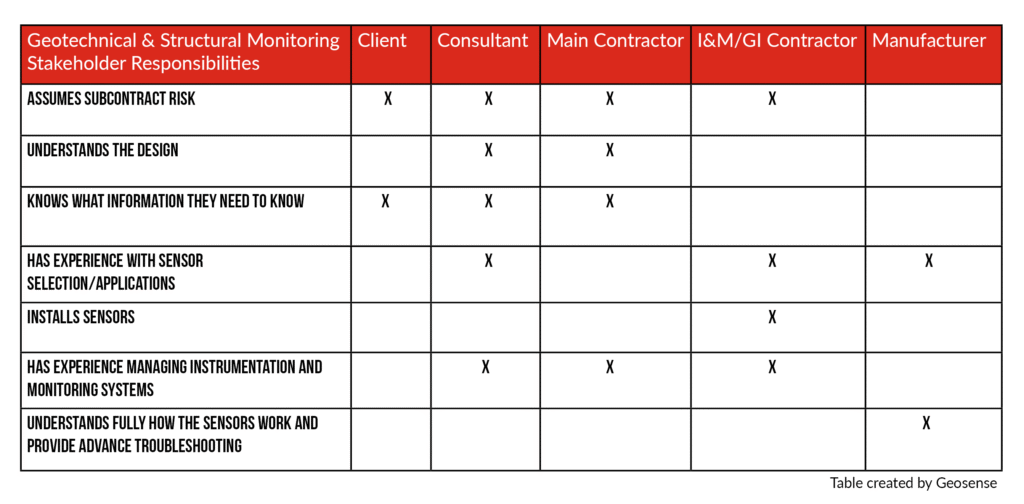

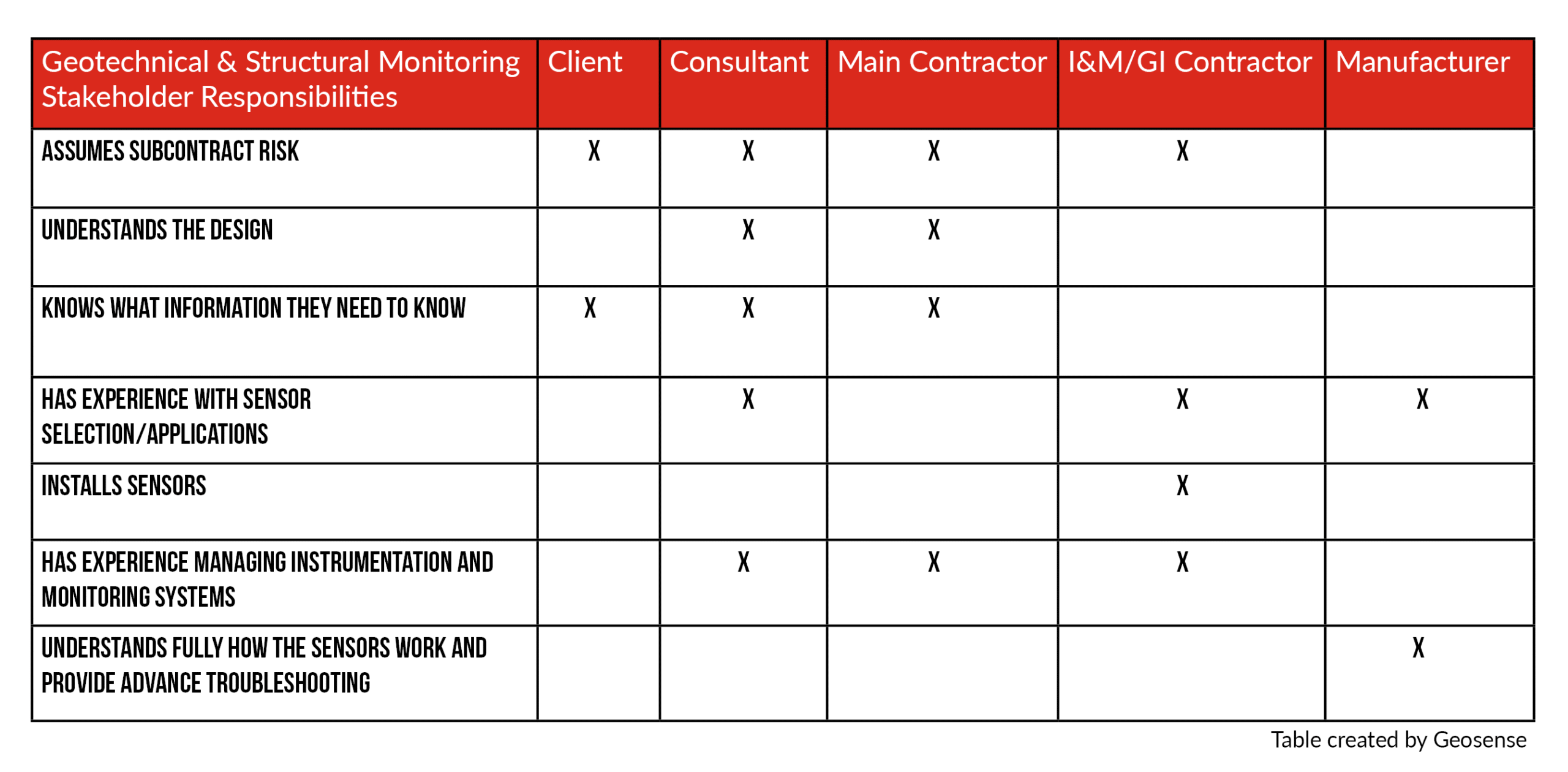
Each member of the project team has their own unique and specialist understanding of the projects. From the table above we can see that no stakeholder has a full understanding of the entire value chain when it comes to instrumentation and monitoring. It is therefore important to have cross-team discussions about the questions that need to be answered, but also about what might affect the data. The key is to engage early, the earlier you employ specialists, the earlier they can input their knowledge and make answering the geotechnical questions easier, quicker, and with more clarity. It is also worth outlining that not all stakeholders view monitoring in the same way. It is therefore important to think about this when discussing the processes and outcomes.
What instrumentation and monitoring might mean to each different stakeholder
Below are a few examples of what instrumentation and monitoring might mean to each different stakeholder:
- Client – Ensure compliance and performance of the project
- Consultant – Provide data and insights to understand how the design/project is performing
- Main contractor – Confirm the construction process and project progress as planned
- I&M contractor – Install technical solutions that provide insights to a wide number of stakeholders
- 3rd Party – Monitoring ensures they are protected
As you can see each stakeholder has a slightly different use or priority for the insights from monitoring, however all of these priorities require one foundation, good quality, reliable data. Often as a manufacturer, we will become part of a conversation about data when it is not clear what the data is telling us. It is incredibly important at this point to have these discussions with a cross-stakeholder team who each bring their perspective and understanding to help better understand that data, to ultimately answer the geotechnical questions we are trying to answer. We often see data that is declared as “erroneous” (see our other blog on this topic), for another member of the project team to inform us that a different type of work was being done in the area. It is conversations like this that highlight the power of engaging and discussing with specialists early. But as explored before, not everyone has all the answers……
Page Contents

Share this article


