 JOIN GEOSHARE
Maintaining Monitoring training and data potential – Final part of 6 ways to improve your I&M

Introduction
You’ve reached the final part of our 6 ways to improve your I&M. We have learnt about specifying the question we want to answer and how to answer it, we’ve engaged early with our specialists and understood how to be pragmatic when it comes to discussing the data. We also discussed the real-world benefits of instrumentation and monitoring and are ready to tackle our geotechnical questions head-on!
Now, I would like to look to the future and to the potential for the data you collect on your projects. This is to ensure that our geotechnical questions continue to be answered and that we continue to experience the benefits.
The skills gap in Monitoring
Firstly, an often spoken about topic in many construction and engineering fields. The skills gap…..
Whilst we do not have a specific answer to this complex issue, we can explore it from a specific industry point of view.
Instrumentation and monitoring is one of the few aspects of the geotechnical/construction industry that does not have a formal qualification. Therefore, industry training is what we must rely on for now. We have developed Geosense Academy as a vehicle to upskill engineers around the world and support the collection of great-quality data to answer the questions we need to answer.
Hopefully having read this series you understand the benefits of instrumentation and monitoring but also the importance of education across the industry. From the knowledge of what sensors, reading what parameters, and where, to delivering high quality reliable installation the key is skills and education.
Collection and automation of monitoring data
We have spoken about the power of the data we can collect, and the insights it can offer when it comes to both mitigation but also performance.
If we look back more than 10 years ago, the automation of sensors in the geotechnical world was in its infancy. We have been automating sensors for much longer than that, but it was somewhat more complex.
With the invention of advanced radio systems, the ability to collect and transmit data quickly automatically has become much easier. The same principles of good installation apply but the speed of data transmission has increased significantly.
So simply, this means that more data is able to be collected to help answer your geotechnical questions more quickly, however, there is also the option of correlating more parameters.
For example, if one sensor reads above a threshold you can set adjacent sensors to increase their reading interval or use a camera to see what is happening.
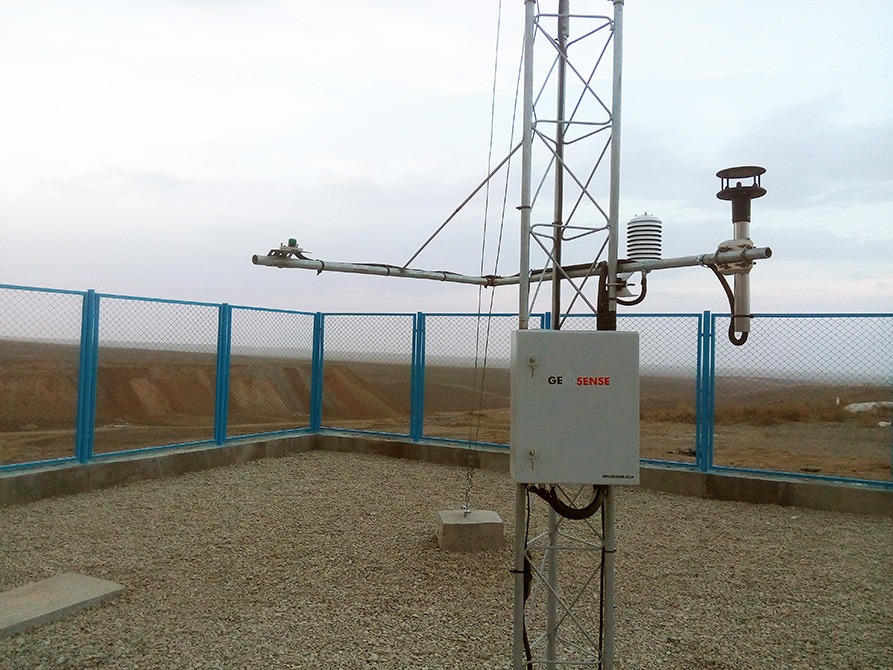
You can also use other data streams to trigger reading interval changes, for example, if a weather station measures above a rainfall limit, you can increase the reading frequency of piezometers or inclinometers in an area of concern. This can not only give you an earlier warning of a failure, but it can also support understanding what aspects of your projects are driven by external factors.


What to do with all of the data?
So the increase in data collection brings with it great insights, however, it also brings with it an exponential increase in data complexity. We are producing more and more data which has both positive and negatives. We have well-established workflows for reading sensors remotely and sending that data into databases or FTPs, however, what we then do with data is key.
With increasing data volumes there are wide-ranging benefits such as:
+ Add detail to a wider understanding
+ Reduced the effect of outliers
+ Increased granularity
However, with larger volumes of data, there are also some negatives:
– A greater requirement for automation
– Large volumes of data need managing
– More powerful tools are required
We have software available in the industry which can accept large volumes of data, analyse and trigger alarms almost instantly.
Is the industry ready for high data rates?
However, all of this extra data raises an important question, is the industry ready to make the decisions on site quick enough so that the high data rate is useful?
We all believe that extra data is good and gives us a deeper understanding, however, if we are not able to act on the data quickly enough does this bring more complexity?
Page Contents


Share this article


