JOIN GEOSHARE
LOAD CELL TYPES

Overview
Three types of load cell are manufactured by Geosense
- Vibrating Wire (VW)
- Strain gauge
- Hydraulic (Manometer or VW Transducer)
The factors to take into account when deciding which load cell type to use include
- Maximum expected load
- Duration of monitoring
- Accuracy required
- Data logging requirement
- Robustness
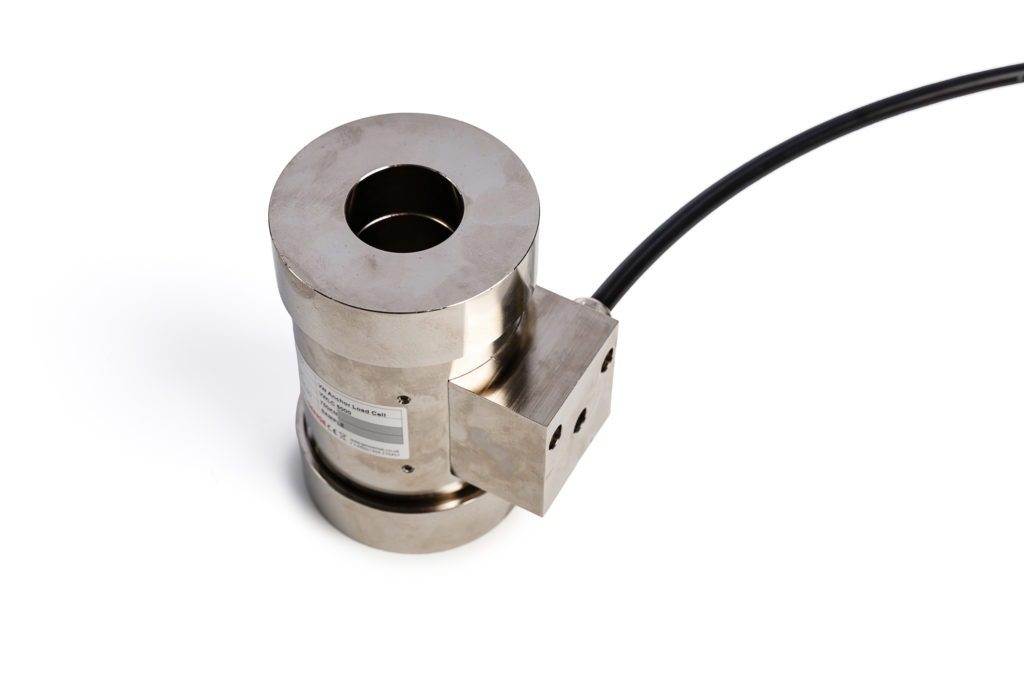
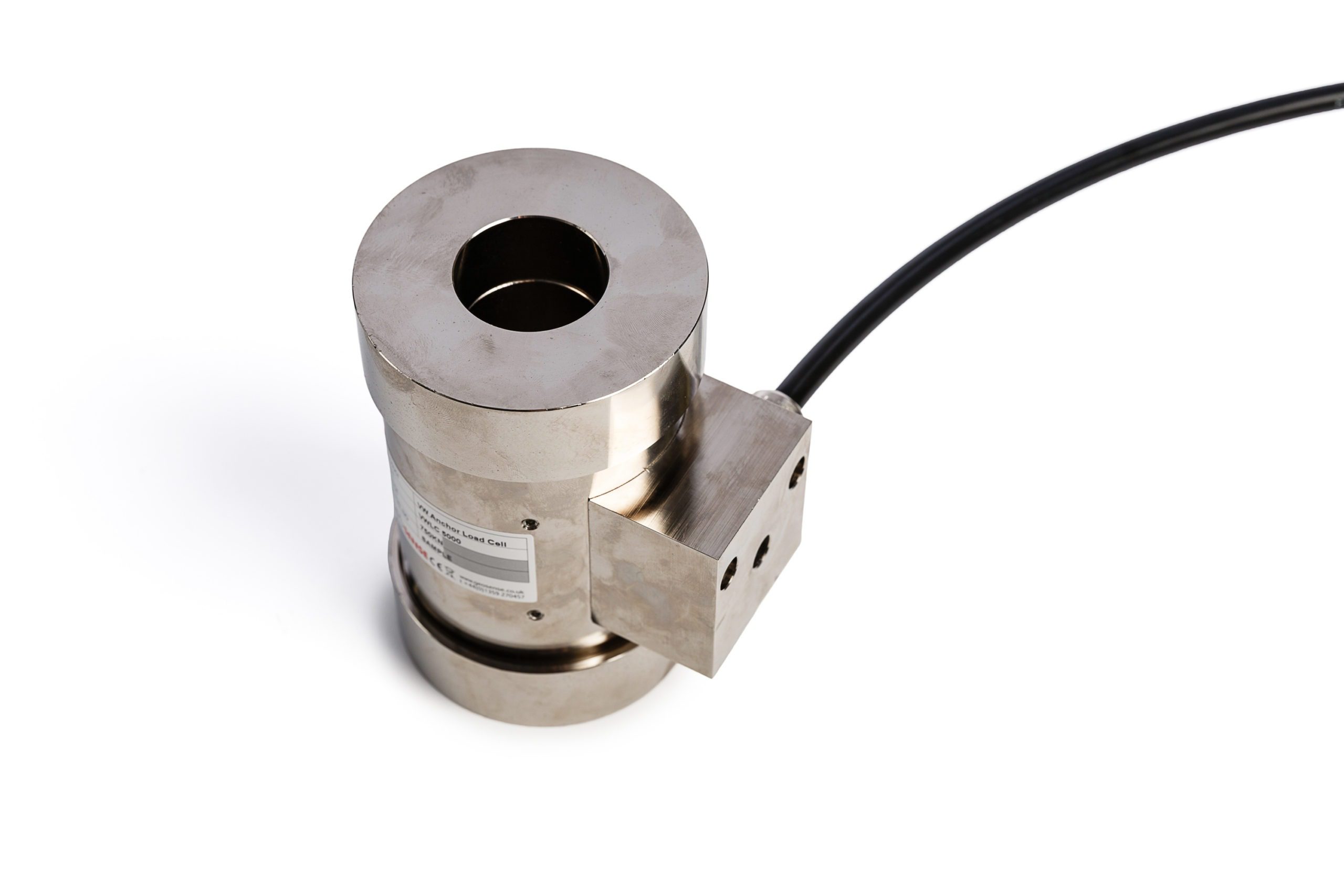
Vibrating wire (VW) load cells
VW load cells are the most robust and suitable for civil engineering applications. Sensors used are electromechanical and mechanically attached in the sensor, so they are very stable over the long term. Due to the fact that each load cell has either three or five gauges, individually read, eccentric loading is easily spotted.
Output signal from VW load cells: Hz or Digits; Ω for thermistor if in place.


Hydraulic load cells
Hydraulic load cells are useful for monitoring anchors on long-term projects where any changes in load are likely to be significant. They can be upgraded to be data logged by attaching a Vibrating Wire (VW) or analogue pressure sensor. When fitted with a Bourdon gauge, they provide quick and simple readings.
Standard output from hydraulic load cells: manometer for pressure indication.
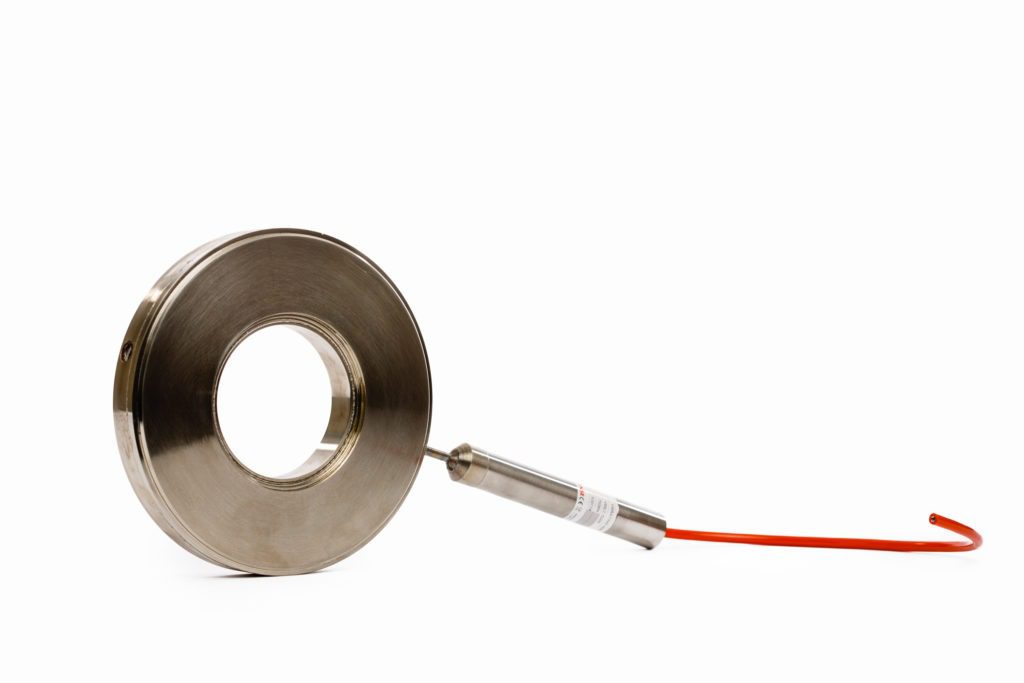

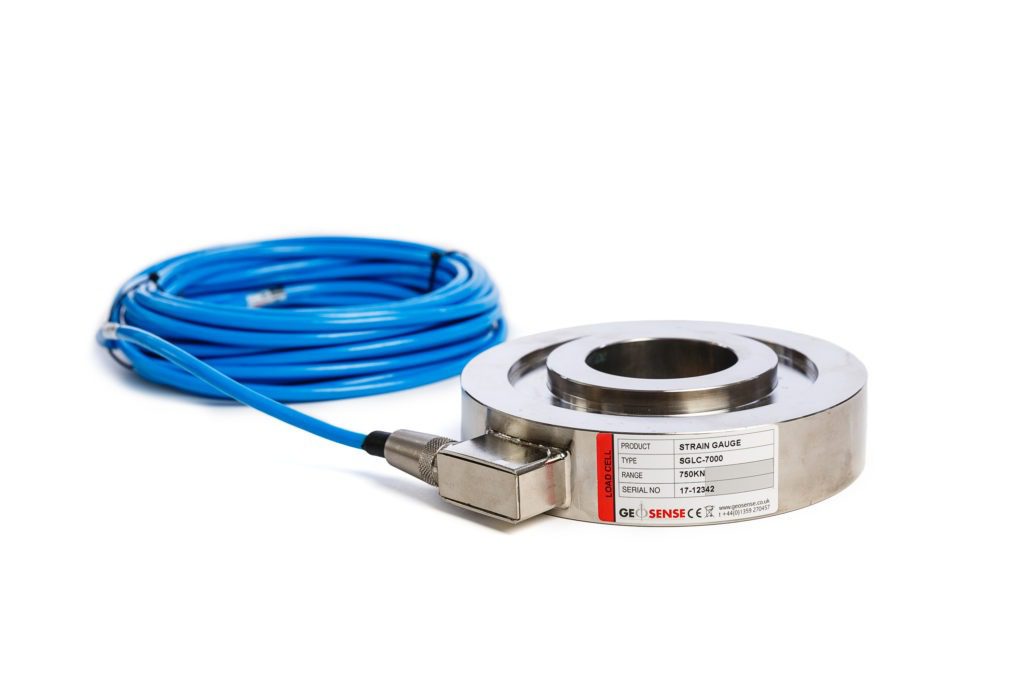
Strain gauge load cells
Should be used if dynamic monitoring is required. They give a constant output and do not have to be polled for information. Strain gauge load cells are very accurate over the short term but may be prone to drift in the long term. They can be data logged and are, arguably, the easiest to use for wireless monitoring applications.
Output signal from strain gauge load cells: mV/V; Ω for thermistor if in place.

Page Contents


Share this article