JOIN GEOSHARE
Understanding Ground Behaviour in Civil Engineering: What Engineers Need to Know
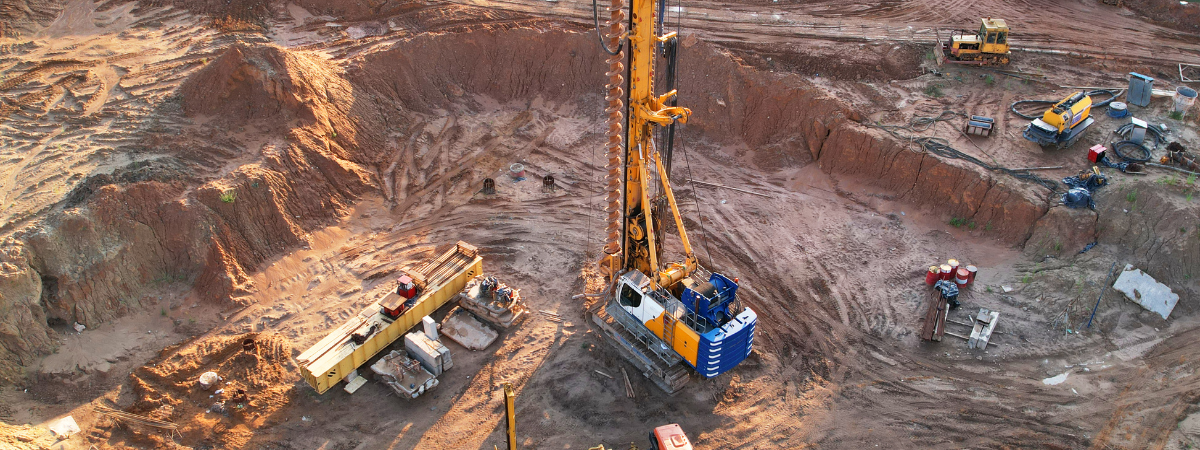
Ground behaviour is one of the most critical uncertainties in civil engineering. Unlike structural materials that can be specified and controlled, soil and rock respond dynamically to changes in stress, moisture, and construction activity.
For engineers, this means that many project risks are not caused by design alone, but by how the ground responds during construction and throughout the asset’s lifecycle. Understanding these behaviours is essential for managing safety, cost, and project risk.
-
Why Ground Behaviour Matters in Engineering Projects
Ground conditions are inherently variable, and even well-investigated sites can behave unpredictably once construction begins.
Unexpected ground movement can lead to:
- Structural damage to adjacent assets
- Serviceability issues such as cracking or distortion
- Project delays due to remedial works
- Increased project cost and contractual risk
In most cases, the challenge is not the absence of data, but the difficulty of predicting how the ground will respond to construction activity.
-
Key Ground Behaviour Risks Engineers Must Understand
Settlement
Settlement occurs when soil compresses under applied load or due to changes in pore water pressure. It is especially significant in soft or unconsolidated soils and can lead to differential movement that affects structural performance.
Lateral movement
Lateral ground movement is commonly associated with excavations and retaining structures. When lateral support is removed, soil can move horizontally toward the excavation, impacting nearby structures and utilities.
Slope instability
Slope failures occur when the shear strength of soil is exceeded. This can be triggered by rainfall, excavation, erosion, or changes in groundwater conditions, often resulting in rapid and progressive failure.
Key takeaway:
Small changes in stress or groundwater conditions can produce disproportionate ground response.
-
What Controls Ground Stability?
Soil type
Different soils behave in fundamentally different ways:
- Clays may deform slowly over time (creep and consolidation)
- Sands and gravels respond more quickly to stress changes
- Fill materials are often highly variable and less predictable
Groundwater conditions
Groundwater plays a key role in stability. Increased pore water pressure reduces effective stress, weakening soil structure and increasing the likelihood of movement.
Stress changes
Construction activity alters the stress distribution within the ground. Excavation removes load, while structural loading adds it. Both can disturb equilibrium and trigger movement.
Key takeaway:
Ground behaviour is governed by changes in effective stress, not just visible deformation.
-
Construction Activities That Trigger Ground Movement
Excavation
Excavation reduces lateral confinement and redistributes stress in surrounding soils. Common effects include:
- Ground movement toward the excavation
- Base heave in soft soils
- Settlement of adjacent structures
Loading
New structures, embankments, and stockpiles introduce additional stress to the ground. If applied too rapidly, this can lead to consolidation settlement or overstressing of weak soils.
Temporary works
Temporary structures such as retaining walls, sheet piles, and propping systems are essential for stability. However, underperformance or incorrect sequencing can lead to rapid ground movement.
Drainage and groundwater control
Drainage significantly influences ground behaviour. Poor drainage can increase pore pressure and reduce stability, while dewatering can induce settlement in surrounding areas if not carefully controlled.
Key takeaway:
Most ground movement is construction-induced rather than naturally occurring.
-
What Engineers Should Monitor (Critical Parameters)
Effective geotechnical risk management relies on identifying measurable indicators of ground behaviour:
Displacement
- Vertical settlement
- Horizontal movement
Pore water pressure
- Indicates changes in effective stress and stability conditions
Tilt and rotation
- Early indicator of structural response to ground movement
Strain
- Helps assess load transfer and deformation in structural elements
Continuous monitoring of these parameters provides insight into how the ground is responding in real time.
-
Early Warning Signs of Ground Instability
Ground failure is rarely instantaneous. It is typically preceded by measurable trends, including:
- Accelerating displacement over time
- Sudden changes in pore water pressure
- Increasing tilt or rotation of structures
- Differential settlement patterns
- Unexpected deformation in retaining systems
Key takeaway:
Failure is usually preceded by detectable warning signs if monitoring is in place.
-
How Monitoring Improves Engineering Decisions
Modern geotechnical monitoring has transformed how engineers manage risk on complex projects. Key benefits include:
- Real-time visibility of ground conditions
- Early identification of unsafe trends
- Ability to adjust construction sequencing
- Improved protection of adjacent infrastructure
- Reduced uncertainty in high-risk environments
In deep excavations, tunnelling, rail corridors, and urban developments, continuous monitoring is often the difference between reactive problem-solving and proactive risk management.
Conclusion
Ground behaviour cannot be fully eliminated as a source of risk in civil engineering, but it can be understood, monitored, and managed.
By combining geotechnical understanding with real-time monitoring data, engineers can make informed decisions, identify early warning signs, and reduce uncertainty throughout construction and operation.
In complex ground conditions, monitoring is not just a reporting tool, it is a critical part of safe and efficient engineering delivery.
Page Contents

Share this article